

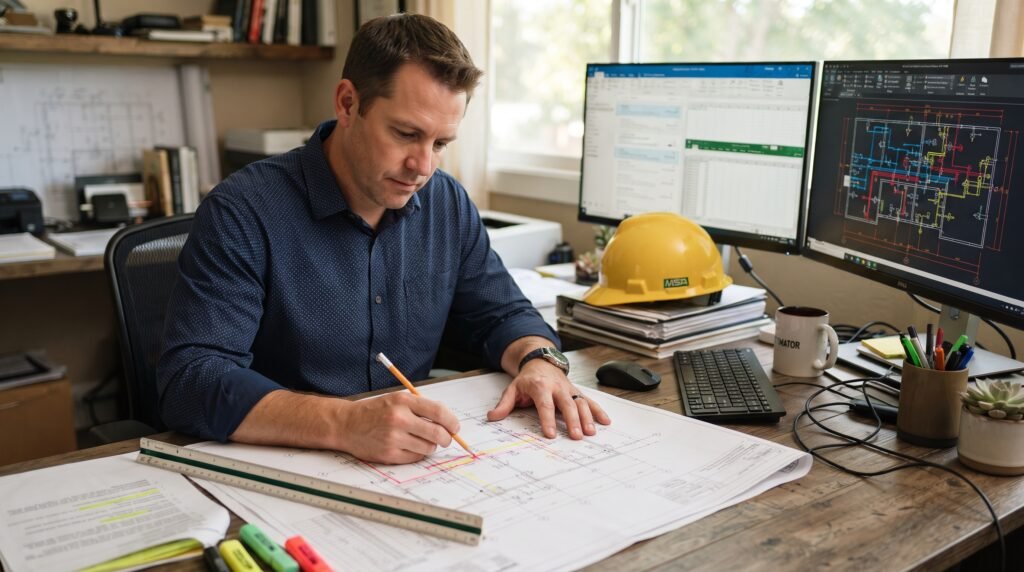
Electrical estimating services are professional offerings in which an estimator reads your plans and specifications, counts every device and measures every run of conduit and wire, then turns those quantities into a priced bid covering materials, labor, equipment and overhead. Contractors use them to bid faster without carrying a full-time estimator on payroll.
The stakes are real. Electrical work runs on tight margins, so an undercounted panel schedule or a forgotten lighting control package comes straight out of profit. A careful takeoff protects the bid before the job starts.
What Do Electrical Estimating Services Include?

A complete estimate goes well beyond a parts list. Expect these pieces:
- Quantity takeoff: counts of fixtures, devices, panels and gear, plus lengths of conduit, cable and wire.
- Labor calculation: installation hours based on recognized labor units, adjusted for the job.
- Material pricing: current supplier quotes for major items such as switchgear, transformers and fixtures.
- Equipment, rentals and subcontract items: lifts, trenching, fire alarm or testing scopes.
- Overhead, profit and contingency: applied to your numbers, not guessed.
- Bid summary: a written scope with inclusions, exclusions and assumptions.
How an Electrical Takeoff Works, Step by Step

- Collect the full document set. Drawings, specifications and every addendum. Missing one addendum is a classic way to bid the wrong job.
- Organize the work. Most estimators group electrical scope under Division 26 of the CSI MasterFormat, then split it into power, lighting, low voltage and so on.
- Count and measure. Each symbol gets counted and each run gets measured, usually on-screen with takeoff software. Waste factors are added to cable and conduit.
- Apply labor units. Hours per item come from a recognized reference. The NECA Manual of Labor Units, for example, has served electrical estimators since 1923. Adjust for height, access and site conditions.
- Price the materials. Commodity items like copper move with the market, so quotes should be fresh.
- Add indirects and markup. Supervision, insurance, permits, mobilization and profit go in here.
- Review before release. A second set of eyes catches double counts and missed scope.
Takeoffs for Different Project Types
Every building type hides its own traps. Here is where estimators spend extra attention.

| Project type | Typical scope | What deserves extra attention |
|---|---|---|
| Residential | Service, branch circuits, lighting, devices | Panel size, code-required circuits, finish selections |
| Commercial | Distribution, lighting, controls, fire alarm | Lighting control specs, tenant coordination |
| Industrial | Motors, feeders, MCCs, process power | Long cable runs, gear lead times, hazardous areas |
| Low voltage | Data, security, access control | Cable counts, terminations, testing |
| Renovation | Partial demolition, tie-ins, upgrades | Unknown existing conditions, phasing, after-hours work |
| Solar and EV charging | Inverters, disconnects, chargers | Utility interconnection, equipment availability |
Why Contractors Outsource Estimating
Bids arrive in waves. One week you have two to price, the next you have eleven. An outside estimating team absorbs those peaks, so your own staff stays focused on running jobs.
There is a quality angle too. Estimators who do takeoffs all day spot patterns, such as which spec sections quietly add scope. You also skip the cost of software seats, training and benefits for a position that may sit idle between bid seasons.
Common Mistakes That Sink an Electrical Bid

- Bidding from an old drawing set. Always confirm revision dates against the latest addenda.
- Ignoring site conditions. A ceiling at 30 feet needs a lift, and a lift needs a line item.
- Using stale material prices. Gear with long lead times can change cost between bid day and purchase.
- Skipping the exclusions list. If the bid doesn’t say the utility fees are excluded, the owner may assume they’re included.
- Applying labor units without adjusting. Published units are averages. A cramped renovation will run slower than a new open warehouse.
Practical Tips From the Estimating Desk

- Count by system, not by sheet. Tallying all lighting first, then all power, makes missed items easier to see.
- Flag every “by others” note. Those two words decide whose budget a scope lands in.
- Keep your own productivity history. Past job hours beat any published number when you’re pricing work you’ve done before.
- Request supplier quotes early for gear. Switchgear and transformers can drive both price and schedule.
- Keep a short assumptions page with every bid. It saves arguments later.
How to Choose an Electrical Estimating Provider
Ask a few direct questions. Do they estimate your kind of work, whether tenant fit-outs or heavy industrial? Which takeoff software and labor database do they use? Will they send a sample estimate so you can check how scope and exclusions are written? What turnaround should you expect for a typical project?
Fast turnaround matters, but clear scope language matters more. A cheap estimate that omits half the exclusions costs far more than it saves.
Get the Numbers Right Before You Bid
Accurate electrical estimating services come down to disciplined takeoffs, honest labor assumptions and current pricing, all written up so nobody argues about scope later. If your next set of plans is sitting on your desk, send it to the team at Amaze Estimation along with your bid deadline, and ask for a quote on a complete takeoff and priced estimate.
Frequently Asked Questions
What are electrical estimating services?
They are outsourced services where estimators perform quantity takeoffs and price the labor, materials and overhead for an electrical project. Contractors use the result to submit bids with confidence.
What is an electrical takeoff?
A takeoff is the process of counting and measuring every electrical item shown on plans. It produces the quantities of devices, fixtures, conduit, wire and gear that the estimate is built on.
How long does an electrical estimate take?
It depends on project size and complexity. A small tenant improvement may take a day or two, while a large commercial or industrial set can take considerably longer. Ask your provider for a timeline before sending plans.
How much do electrical estimating services cost?
Pricing varies by provider, project size and scope. Many charge per project, and some price by plan complexity. Request a quote with your drawings so the figure reflects the actual work.
What documents does an estimator need?
Electrical drawings, specifications, addenda and any related architectural or mechanical sheets. A bid due date and any known site conditions help too.
Can estimators handle residential and commercial work?
Yes. The method is the same, though commercial and industrial jobs usually involve more systems, larger gear and stricter specifications. Confirm the provider has experience with your project type.
Which software do electrical estimators use?
Most use digital takeoff tools paired with an estimating database. The specific platform matters less than whether the output is clear, checkable and compatible with how you bid.
How accurate are outsourced estimates?
Accuracy depends on drawing quality, how current the pricing is, and how well labor assumptions match the job. A good provider documents assumptions so you can review and adjust them.
Should I still review an estimate before submitting a bid?
Yes. You know your crew, your suppliers and your market. Treat the estimate as a strong foundation, then apply your own judgment on labor and risk.
- American Society of Professional Estimators, aspenational.org: supports general estimating-practice and professionalism points.
- U.S. Bureau of Labor Statistics, bls.gov: only if you later add labor-market or wage context; look up the current electricians page rather than quoting figures from memory.