
Winning more construction bids isn’t about luck, and it isn’t about being the cheapest number on the table. In most cases, contractors who consistently win work share one habit: they estimate with precision. If you’re wondering how to win more construction bids in a market where margins are thin and general contractors (GCs) are bidding on the same public and private projects, the answer usually comes back to the same thing, accuracy in your numbers builds trust, protects your profit, and gets your bid picked.
This article breaks down exactly why estimate accuracy drives win rate, what separates a losing bid from a winning one, and how to build an estimating process that helps you close more jobs without sacrificing margin.
Why Accurate Estimates Matter More Than Low Bids
There’s a common myth in construction bidding: the lowest number always wins. In reality, owners and general contractors reviewing subcontractor bids are looking for consistency, not just a rock-bottom price. A bid that’s suspiciously low often signals missed scope, and project owners know it.

When your estimate is accurate, three things happen at once:
- Your number reflects the real cost of labor, materials, and site conditions, so you’re not leaving money on the table or setting yourself up for a loss.
- Your bid line items match what the owner or GC expects to see, which builds immediate credibility during bid review.
- You reduce the risk of change orders and disputes later, because the original scope was priced correctly from day one.
Consequently, accurate estimating isn’t just a back-office task. It’s a competitive advantage that shows up directly in your close rate.
The Real Cost of Inaccurate Estimates
Before getting into solutions, it helps to understand what inaccurate estimating actually costs a contracting business. Underestimating a job might win you the contract, but it often leads to squeezed margins, disputes over change orders, and damaged relationships with clients. Overestimating, on the other hand, prices you out of the job entirely before you even get a chance to prove your value on-site.

| Estimating Error | Immediate Effect | Long-Term Impact |
|---|---|---|
| Underestimating labor hours | Bid looks competitive | Margin erosion, rushed crews, quality issues |
| Missing material cost updates | Bid appears low | Budget overruns mid-project |
| Ignoring site-specific conditions | Scope gaps | Change order disputes, delays |
| Overestimating contingency | Bid looks high | Lost bid, missed opportunity |
As the table shows, both directions of inaccuracy carry a cost. Therefore, the goal isn’t simply to estimate low or high, it’s to estimate right.
How Accurate Estimates Improve Your Bid Win Rate
1. They Build Trust With General Contractors and Owners

GCs and owners often work with the same subcontractors and estimating partners repeatedly. When your numbers are consistently accurate, you become a known, reliable bidder. Over time, this reputation alone can shift you from “one of many bidders” to a preferred subcontractor who gets invited to bid privately, rather than competing in an open pool.
2. They Reduce Bid Rejection Due to Scope Gaps
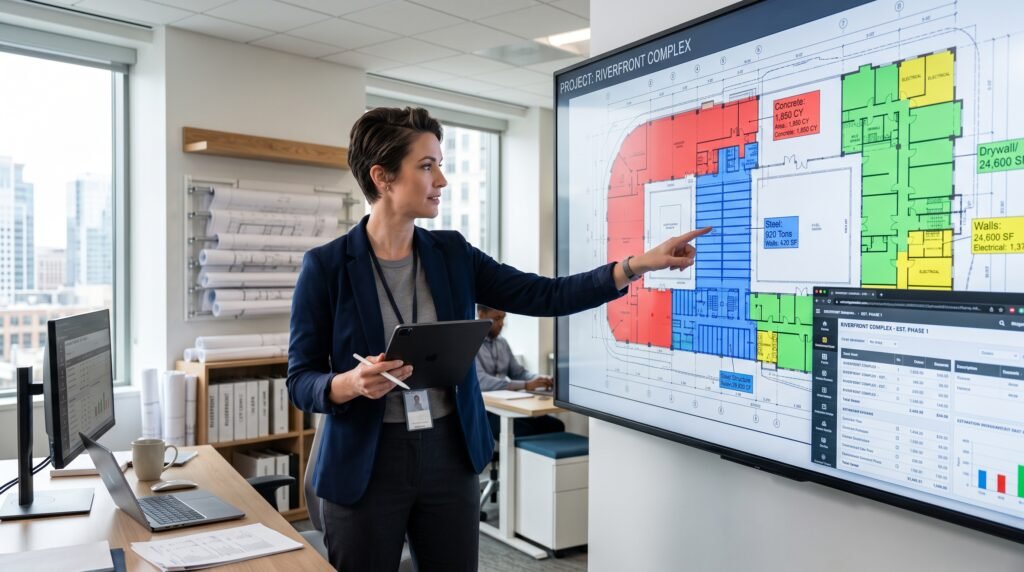
A huge number of bids get disqualified or deprioritized not because the price was wrong, but because the scope didn’t match the plans and specs. Detailed, accurate takeoffs that reflect the actual drawings prevent this. When your line items align precisely with the bid documents, reviewers spend less time questioning your submission and more time comparing it favorably against competitors.
3. They Protect Your Profit Margin After You Win
Winning the bid is only half the battle. If your estimate was inflated with guesswork, that inaccuracy shows up during the project as unexpected costs. Accurate estimating means the number you win with is the number you can actually build to, which protects your bottom line from day one through project closeout.
4. They Speed Up the Bid Review Process
Estimators and project managers reviewing multiple bids favor submissions that are clean, well-organized, and easy to compare. A precise, professionally formatted estimate signals competence before the reviewer even gets to the numbers. In competitive bidding, that first impression matters.
Practical Ways General Contractors Can Improve Estimate Accuracy
If you’re serious about learning how to win more construction bids, here are practical steps that make a measurable difference:

- Use detailed digital takeoffs instead of rough manual measurements, especially for sitework, excavation, drainage, and paving scopes where quantities shift the bid significantly.
- Update material and labor cost data regularly, since pricing volatility can turn a competitive bid into a losing one within weeks.
- Break down bids by trade and phase so reviewers can clearly see where your numbers come from, rather than presenting a lump-sum figure that raises questions.
- Build in realistic contingencies based on site history and project type, rather than a flat percentage applied across every job.
- Partner with a professional estimating service when in-house bandwidth is limited, particularly during high-volume bidding seasons.
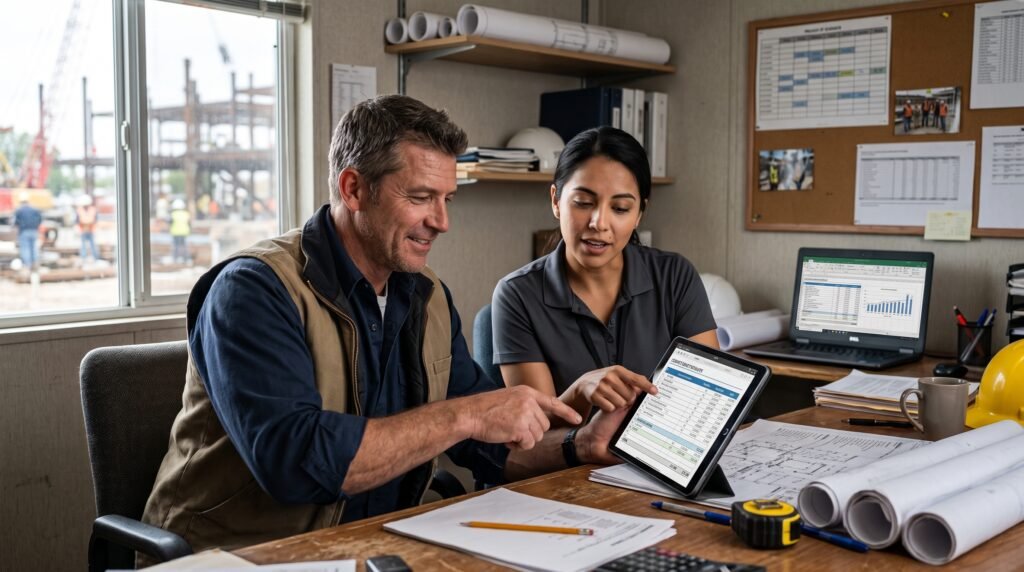
Notably, this last point is where many growing GCs see the fastest improvement. Outsourcing estimating to specialists who work exclusively on takeoffs and bid packages frees up your team to focus on relationship-building, project management, and closing deals, while ensuring the underlying numbers are dependable.
Expert Tip: Treat Every Estimate Like a Sales Document
An accurate estimate does more than calculate cost. It communicates professionalism. Presenting a clean, itemized, easy-to-read bid package, with clear assumptions and exclusions noted, often influences decision-makers just as much as the price itself. Contractors who treat their estimates as part of their sales pitch, not just a math exercise, tend to see noticeably higher win rates over time.
Accurate Estimating vs. Guesswork: A Quick Comparison

| Factor | Accurate Estimating | Guesswork-Based Estimating |
|---|---|---|
| Win rate consistency | Stable, repeatable | Unpredictable |
| Profit margin after award | Protected | At risk |
| Client trust over time | Builds steadily | Erodes with disputes |
| Change order frequency | Lower | Higher |
| Bid review speed | Faster | Slower, more questions |
Conclusion
Improving your bid win rate isn’t about chasing the lowest price on every job. It’s about presenting numbers that are accurate, well-documented, and easy for reviewers to trust. General contractors who invest in precise takeoffs, updated cost data, and professionally structured bid packages consistently outperform competitors who rely on rough estimates or guesswork. If you want to learn how to win more construction bids sustainably, without sacrificing margin, accuracy has to come first.
Ready to strengthen your next bid? Partner with Amaze Estimation for detailed, reliable takeoffs across sitework, excavation, drainage, and paving, and submit bids that win on accuracy, not guesswork. Reach out today to get a fast, precise estimate for your next project.
Frequently Asked Questions
1. How do accurate estimates improve construction bid win rates? Accurate estimates build trust with reviewers, reduce scope gaps, and present a professional, well-organized bid, all of which make a submission more competitive and credible.
2. What is the biggest mistake contractors make when bidding? The most common mistake is underestimating labor or material costs to appear competitive, which often leads to margin loss or disputes after winning the job.
3. How to win more construction bids without lowering prices too much? Focus on precise takeoffs, clear scope breakdowns, and professional presentation. Reviewers often favor accurate, trustworthy bids over the cheapest option.
4. Why do accurate takeoffs matter for bid success? Detailed takeoffs ensure your bid quantities match the actual project plans, which prevents scope mismatches that can get a bid disqualified.
5. Does outsourcing estimating improve bid win rate? Yes. Professional estimating services specialize in accurate takeoffs and current pricing data, which helps contractors submit more competitive and reliable bids consistently.
6. How often should contractors update material and labor costs? Ideally, cost data should be reviewed before every bid cycle, since material pricing and labor rates can shift significantly within a few weeks.
7. What role does contingency play in estimate accuracy? A well-calculated contingency, based on site history and project type, protects margin without inflating the bid enough to lose the job.
8. Can inaccurate estimates hurt long-term client relationships? Yes. Consistent estimating errors lead to change order disputes and missed budgets, which damage trust and reduce repeat business from GCs and owners.
9. What sitework and trade scopes benefit most from precise estimating? Excavation, drainage, underground utilities, and paving scopes are especially sensitive to quantity errors, making detailed takeoffs essential for these trades.
10. How does bid presentation affect win rate? A clean, itemized bid with clear assumptions and exclusions signals professionalism, often influencing decision-makers as much as the price itself.
Associated General Contractors of America (agc.org) — industry bidding standards and trends
U.S. Bureau of Labor Statistics (bls.gov) — construction labor cost data